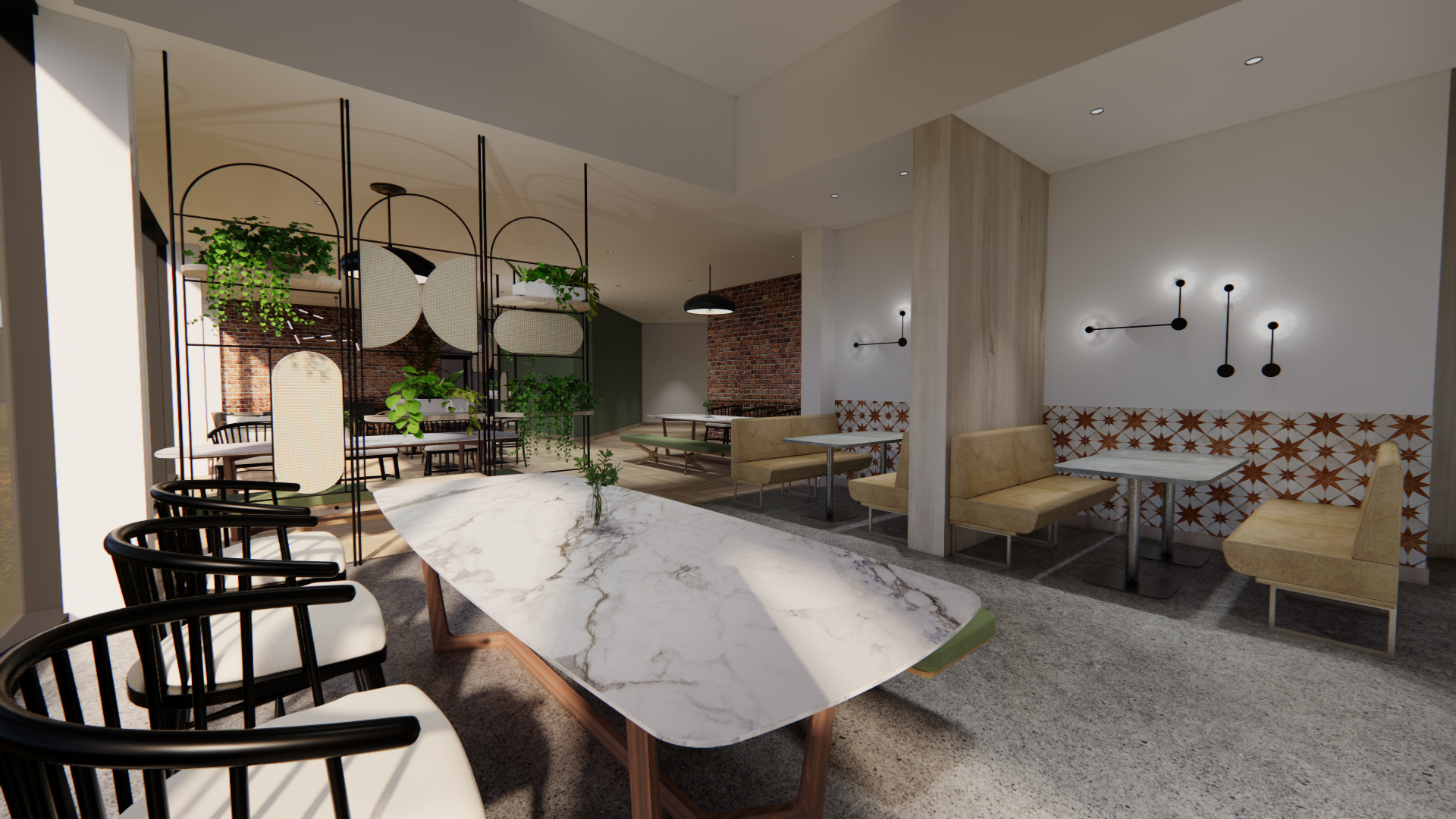
Why Acoustics Matter in Public Spaces: Inclusive Design for Different Nervous Systems
We don’t all experience sound in the same way. And it’s something that still gets overlooked far too often in the design of public spaces.
Cafés, restaurants, offices, waiting areas and lobbies are hard‑working environments. They’re rarely used for just one purpose at a time. Instead, they’re shared by people with very different needs, energy levels and reasons for being there.
One Space, Many Experiences
In the same room, at the same time, you might find:
Friends catching up, struggling to hide their belly laughs
A business owner seeking a change of scene, trying to focus on a to‑do list
An overstimulated parent who simply needs a moment of calm with a coffee they didn’t have to make themselves
These parallel experiences are happening constantly in public spaces. Yet sound is often treated as a neutral backdrop, rather than something that actively shapes how people feel and behave.
Acoustics and Neurodiversity
For neurodivergent people in particular, sound is not just background noise. It can be overwhelming, distracting, or even physically exhausting.
When acoustics aren’t carefully considered, spaces become harder to tolerate rather than easier to enjoy. And this doesn’t only affect neurodivergent users — it impacts everyone. Stress levels rise, concentration drops, and people instinctively limit how long they stay.
Despite this, acoustics are often one of the last things addressed in public space design — if they’re considered at all.
When Design Looks Good but Fails in Real Life
Hard surfaces, high ceilings and open layouts can look impressive in a presentation or on social media. But without proper acoustic thinking, they amplify every sound:
overlapping conversations
chairs scraping across floors
coffee machines, doors and background music competing for attention
What looks striking on screen often fails in real‑world conditions.
The result is predictable:
People cut visits short and often don’t return
Staff feel drained by the end of the day
Businesses are forced to absorb the cost of expensive refurbishments that don’t perform as expected
Inclusive Design in Practice
When I talk about inclusive design, I’m not referring to surface‑level gestures. I’m talking about environments that are intentionally designed to support different nervous systems.
That means:
Creating pockets of calm alongside more energetic areas
Designing layouts that allow people to choose how and where they sit
Using materials, surfaces and spatial planning to control sound rather than amplify it
This allows people to regulate their sensory experience — whether they’re there to work, wait, meet, or simply exist for a while.
Why Acoustics Are Never an Afterthought
For me, acoustics are never an add‑on or a problem to fix later. They’re part of how I design spaces that actually work — for different people, on different days, for different needs.
A space that sounds right often feels right too.
Working With Studio SFE
If you’re planning or refurbishing a café, restaurant, office, clinic or other public‑facing space and want it to feel genuinely inclusive and comfortable to use, acoustic design needs to be part of the conversation from the start.
I work directly with business owners and operators across the North West — including Manchester, Cheshire and Merseyside — to design commercial interiors that balance atmosphere, functionality and wellbeing.
If you’d like to explore how your space could work better for the people using it every day, you’re welcome to get in touch via www.studiosfe.com.