

Why the Waiting Area Is the Most Underrated Space in Wellness Design
This is the moment that matters more than many wellness practitioners would like to admit: the arrival and waiting lounge.
Before any treatment begins, before a consultation starts, before a practitioner even says hello something important has already happened. The client has arrived. And that arrival is officially the first step in their experience.
Yet in salons, dental practices, beauty clinics and wellness spaces, the waiting area is still too often treated as a holding zone between the street and the treatment room. Functional, neutral, forgettable.
That’s a missed opportunity.
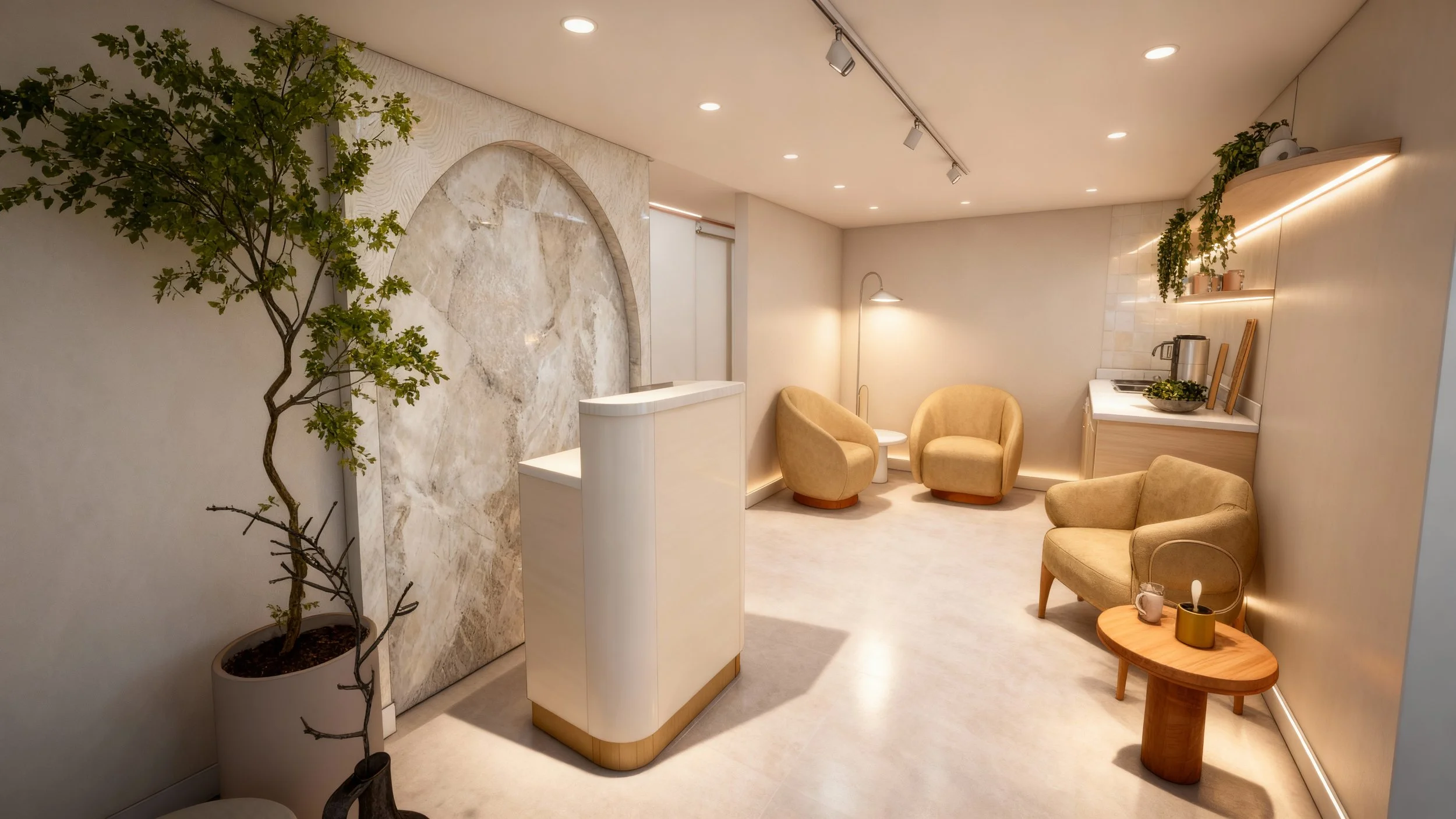
Modern Japandi-style clinic waiting area with soft lighting, natural materials and calm reception lounge design
The Client Experience Starts at the Front Door
When I take clients through design proposals, I always start at the entrance and reception lounge. Not because it’s the most visually exciting space , but because it’s where the client journey begins.
If you don’t experience the space through your client’s eyes first, then interior design becomes decoration rather than strategy.
A client doesn’t arrive as a blank slate. They arrive carrying their day with them:
background stress
time pressure
self-consciousness
mild anxiety (especially in clinical or treatment-led environments)
The role of the waiting area is to help them transition.
The Waiting Area as a Mental Shift
The reception lounge is where clients mentally shift from their day-to-day world into yours.
This is the moment where:
outside noise begins to fade
tension starts to ease
attention moves away from phones and schedules
the body becomes more present
Good waiting area design supports this shift quietly and subconsciously. It doesn’t demand attention. It regulates emotion.
Lighting that softens rather than exposes.
Seating that feels considered, comfortable and respectful.
Acoustics that prevent conversations and treatment noise from bleeding through.
These are not aesthetic choices. They are behavioural ones.
The Business Case: Waiting Areas and ROI
If we look at this space from a return-on-investment perspective, the waiting area carries more weight than most treatment rooms.
Why?
Because it delivers the first visual cue about your business.
Before a single word is exchanged, clients are subconsciously assessing:
professionalism
hygiene
quality of care
attention to detail
whether they feel safe, respected and looked after
Harsh lighting, worn seating, poor acoustics or visible clutter all keep the nervous system alert when it should be unwinding.
And when the body stays alert, trust takes longer to build.
What Happens When You Get It Right
When the waiting area is designed with intention, something subtle but powerful happens.
By the time the client is called in:
they are calmer
more open
more receptive
more trusting
That makes the practitioner’s job easier.
Consultations flow better. Treatments feel smoother. Communication improves. And clients leave with a stronger emotional impression of the experience as a whole.
Which, as any business owner knows, often translates into something very practical:
more positive Google reviews.
Waiting Areas Are Not Leftover Space
At Studio SFE, we design waiting areas as active parts of the service journey, not leftover floor space.
They are psychological buffers — carefully designed moments that prepare the client for what comes next.
Because great design in wellness environments doesn’t start in the treatment room.
It starts the moment someone walks through the door.
If you’re planning a new clinic, salon or wellness space or refreshing an existing one in the North West of England, whether Manchester, Cheshire or Merseyside, and want the client experience to feel calm, considered and intentional from the moment someone arrives, this is the kind of work I specialise in.
I work directly with business owners and operators to design reception and waiting areas that do more than look good — they help clients settle, build trust, and set the tone for the treatment experience that follows. If you’re based locally and want to approach your interior design strategically, feel free to get in touch to discuss your project.