

Why are we so obsessed with interior design trends?
Or maybe the better question is — why is the internet so obsessed with them?
Every year we’re presented with a new wave of must-have colours, finishes, materials and collections. Trend reports. “Colours of the year.” Overhyped launches that promise to redefine how we live, work and socialise.
But step away from the headlines for a moment and ask yourself this:
Do people really walk into a café, restaurant or workplace wondering whether the interior is on trend?
Or do they want to feel welcome, comfortable, productive — able to simply exist in the space without friction?
In my experience, it’s always the latter.
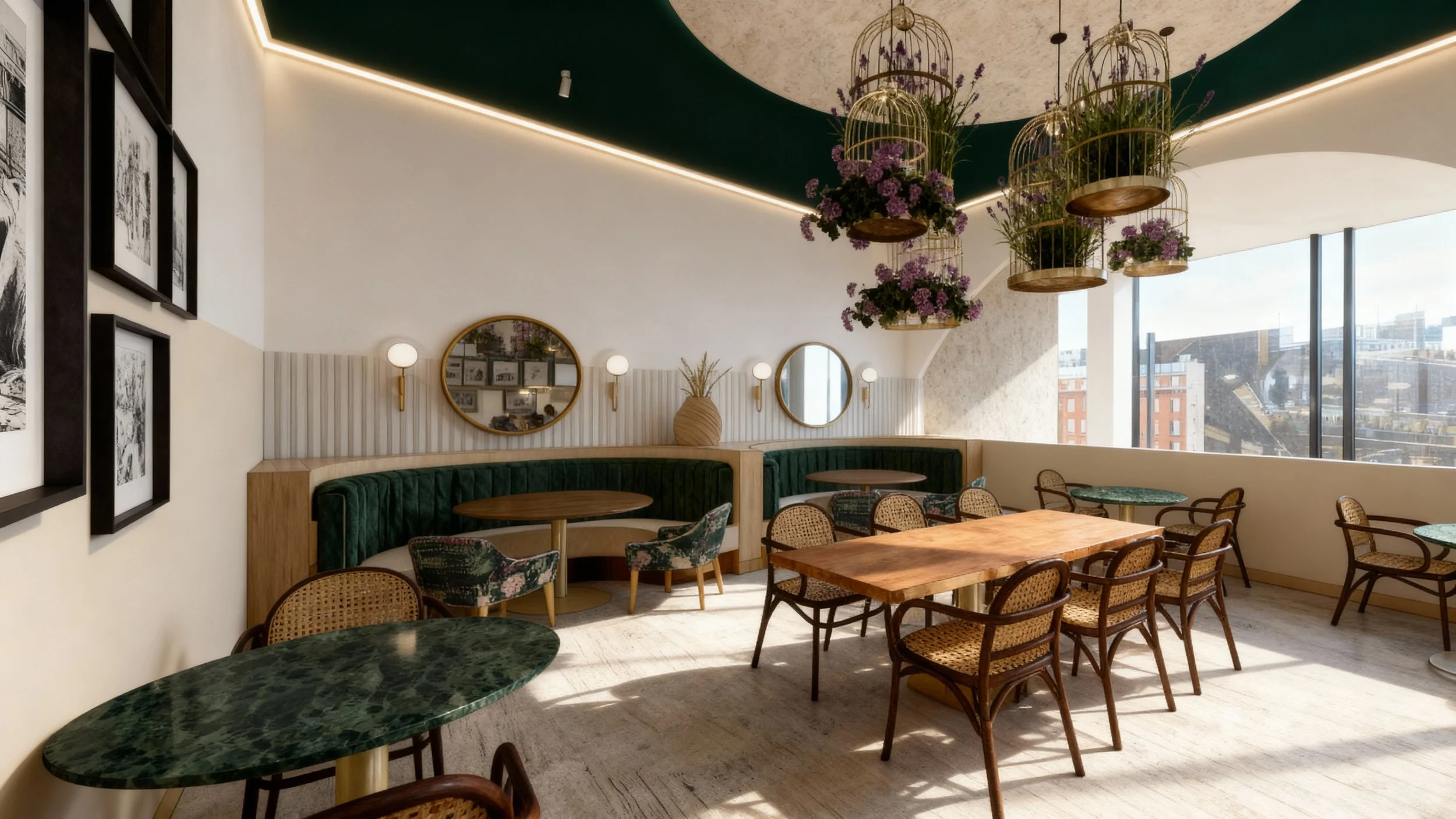
When Trends Become Noise
Trend reports and design forecasts aren’t inherently bad. Innovation matters. Progress matters. New materials, technologies and ideas push the industry forward.
But the way trends are consumed today often feels less like thoughtful insight and more like noise.
Click-bait headlines.
Endless “what’s next” lists.
A constant sense that if you don’t keep up, you’re already behind.
Instead of supporting good design thinking, this obsession can create pressure to constantly refresh, replace and redesign — even when nothing is actually wrong with the space.
Call me slow. Call me boring.
But that’s my honest take on most trend reports.
Do We Really Need to Design Our Lives Around Trends?
New ideas are necessary. Stagnation isn’t healthy for any creative industry.
But do we need to obsess over trends so much that we start designing our spaces — and by extension, our lives and businesses — around them?
For me, the answer is simple.
No.
Design shouldn’t feel disposable. Especially in commercial environments where spaces are expected to perform day in, day out, under real pressure, with real people using them in real ways.
How I Actually Approach Design
Whenever I work on a project, my focus is always on practicality and longevity.
I ask questions like:
Will this last?
Will it perform well over time?
Will I be getting a phone call six months down the line about cracks, stains, wear or maintenance issues?
These aren’t pessimistic questions. They’re responsible ones.
Because great design doesn’t just look good on opening day — it still works on a wet Tuesday afternoon, months after the excitement has worn off.
Longevity Doesn’t Mean Boring
Choosing longevity over trends doesn’t mean playing it safe or producing bland, forgettable interiors.
I’m all for blue-sky thinking when it comes to design concepts. Creativity, bold ideas and strong narratives absolutely have their place.
The difference is where those ideas are applied.
Layouts, circulation, lighting strategy, material performance and durability should be designed to last.
More expressive elements — colour, graphics, styling, loose furniture — can evolve over time without requiring a full redesign.
This balance allows spaces to stay relevant without being locked into a single moment in time.
Designing for Return on Investment, Not Just Attention
Ultimately, my role is to help clients get the best return on their investment.
That means proposing design solutions that:
stand the test of time
age gracefully
support the way people actually use the space
and continue to add value long after the launch photos are taken
Spaces should be remembered because of how they made people feel — not because of the colour of the upholstery that happened to be popular that year.
The Quiet Power of Great Design
That’s the beauty of truly great design.
You don’t always notice it straight away.
First, it’s a feeling.
Then it’s comfort, flow, atmosphere and connection.
Only after that do the aesthetics fully reveal themselves. And that’s exactly how it should be.