

Multitasking Is a Non-Negotiable in Workplace Dining Design
What was once a simple staff canteen has quietly become one of the hardest-working spaces in the modern workplace.
Corporate dining areas didn’t evolve into multitasking environments by accident. They did so because the rhythm of the working day has fundamentally changed — and interior design has had to follow.
Over the last decade, rigid desk-based routines have been replaced with more fluid patterns of work. People move throughout the building, shift between focused and collaborative tasks, and expect spaces to support them without friction.
Workplace dining areas, cafés and food halls have naturally absorbed many of these functions.
The issue is not whether these spaces should multitask.
The issue is whether they are designed to do so properly.
The Shift From “Eat and Leave” to All-Day Use
Today’s workplace hospitality briefs are filled with terms like:
agile
social hub
adaptable
culture-driven
What’s notably missing is the old assumption: eat quickly and move on.
Instead, the same dining area is now expected to perform across multiple scenarios:
early morning coffee and breakfast
lunch rush
informal meetings and laptop work
afternoon catch-ups
evening events, talks and social gatherings
This is not scope creep — it’s a realistic reflection of how people use space.
From a business perspective, it also makes sense.
Large, central areas with high-quality finishes are no longer expected to sit dormant outside lunch hours. They need to justify their footprint, operational cost and cultural value throughout the day and beyond standard working hours.
Where Workplace Dining Design Often Falls Short
The brief is usually spot on.
The execution is where problems appear.
When dining spaces are still designed primarily around peak lunch service, they tend to underperform in every other scenario.
Common issues include:
seating that works for a 15-minute lunch but becomes uncomfortable during longer meetings
long rows of tables that feel efficient at capacity but overwhelming during quieter periods
lighting schemes that energise the space during busy hours yet feel clinical or exposed when occupancy drops
acoustics that amplify buzz at lunch and chaos during events
The result is a space that technically “does everything” — but does nothing particularly well.
In many workplaces, people simply adapt their behaviour around these shortcomings. They perch awkwardly with laptops, avoid the space altogether outside peak hours, or retreat back to desks and meeting rooms that were never meant to absorb this overflow.
Designing for Multitasking Is a Strategic Decision
Multifunctional dining areas do not happen by accident. They are the result of deliberate, layered design thinking.
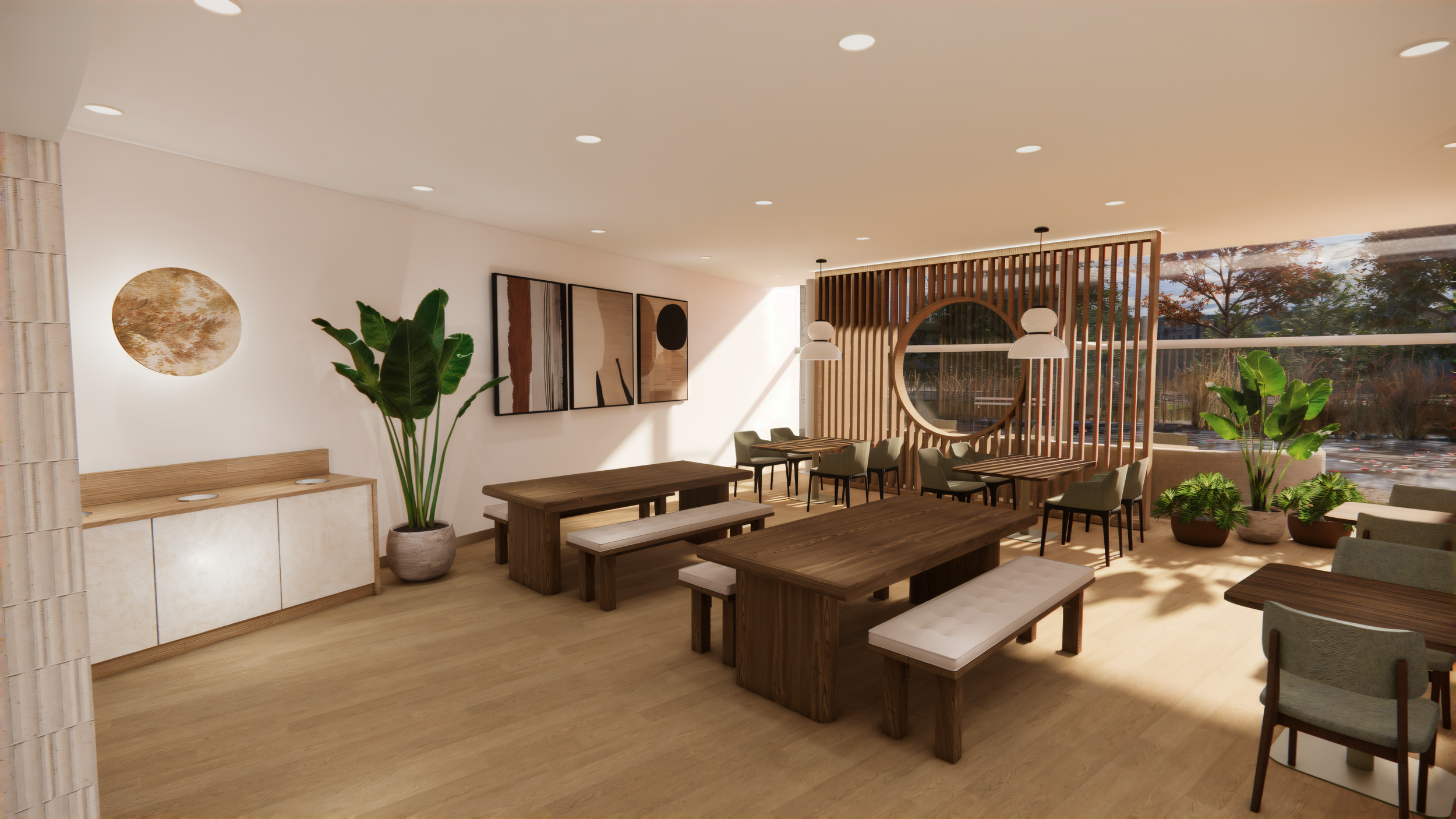
When I approach workplace dining or food hall projects, I consider the space as a hybrid environment first, rather than a single-use dining room.
That means looking closely at:
varied seating types and postures to support different lengths of stay
zones that allow different energy levels to coexist without hard separation
integrated power and charging points that feel intentional, not retrofitted
acoustic strategies that balance atmosphere with comfort
lighting schemes that can shift between daytime use, quiet periods and evening events
Each of these elements contributes to whether the space genuinely supports multitasking — or merely tolerates it.
Spaces That Work Harder, Not Louder
Well-designed workplace dining areas are not just busy at lunchtime.
They are useful all day.
They support focused work without forcing formality, encourage social interaction without pressure, and transition smoothly into event settings without feeling improvised.
Most importantly, they adapt to real behaviour rather than idealised scenarios.
Good design does not ask people to change how they work.
It responds to how they already do.
Is Your Workplace Dining Space Still Working Like a Canteen?
If your dining hall, workplace restaurant or café no longer reflects how your teams actually use the space — or sits empty outside peak hours — it may be time to rethink its role.
Designing for multitasking is not about adding more furniture or chasing trends.
It’s about aligning space, behaviour and business needs.
If you’re considering an update, I’d be happy to talk.
👉 Get in touch at www.studiosfe.com